


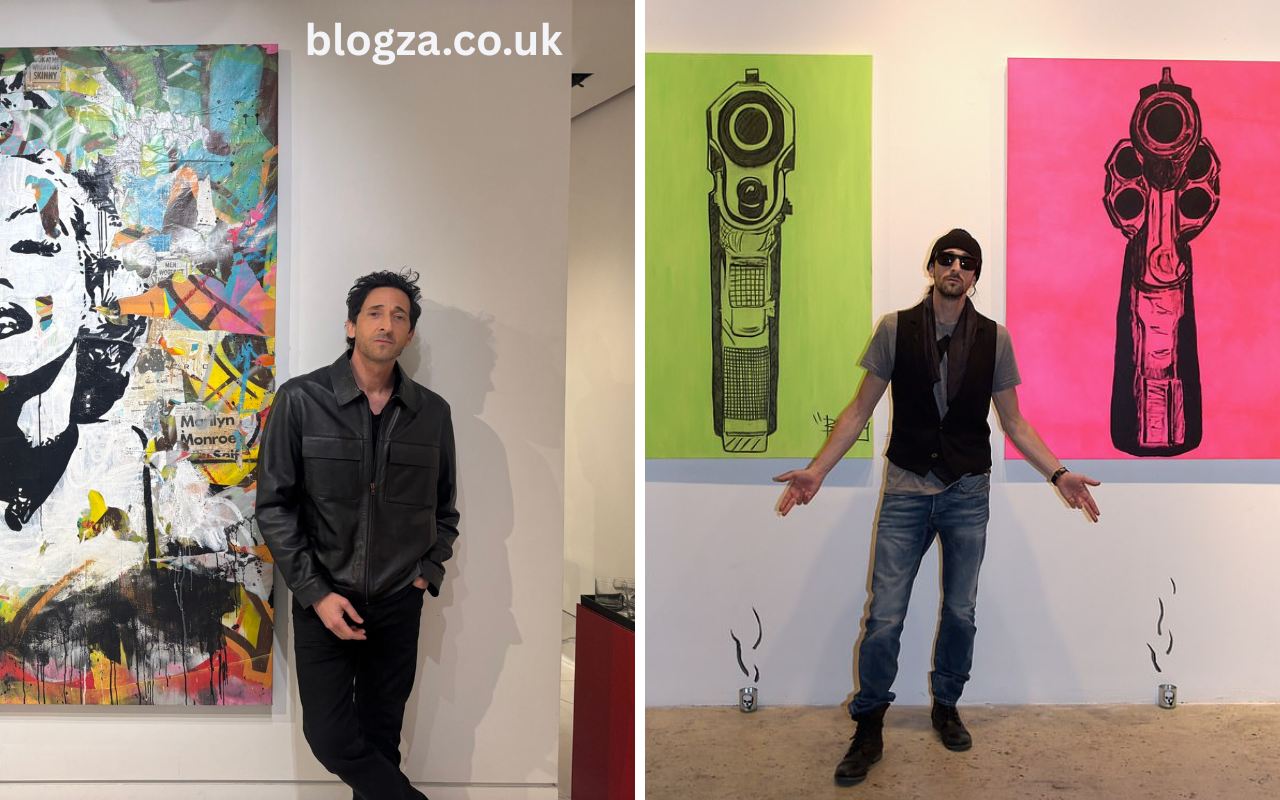
Adrian Brody Art: Inside the Creative World of a Hollywood Actor Turned Visual Artist
Adrian Brody art represents a multidimensional creative identity that extends far beyond his established career in Hollywood cinema. While widely recognized for his powerful performances on screen, Brody has developed a parallel artistic practice that focuses on visual storytelling through painting and mixed media. His art is not a side interest but a long-standing creative outlet that reflects his personal emotions, memories, and cultural observations.
This artistic dimension of Brody’s life has slowly gained recognition in contemporary art circles, where his work is now viewed as part of the broader conversation around celebrity artists entering fine art spaces. Adrian Brody art blends emotional depth with raw visual experimentation, creating pieces that often feel both intimate and expressive. His creative identity is shaped by a desire to communicate beyond dialogue, using texture, color, and form.
Over time, his practice has evolved into a serious artistic pursuit, with exhibitions and gallery showings reinforcing his position as a multidisciplinary creator. Rather than separating acting and art, Brody integrates both worlds, allowing each to influence the other. This interconnectedness defines the foundation of Adrian Brody art as a living, evolving practice.
Early Life Influences Shaping Adrian Brody Art
The origins of Adrian Brody art can be traced back to his upbringing in New York City, a place known for its cultural diversity and artistic energy. Growing up in Queens exposed him to graffiti, street culture, photography, and urban textures that would later become central to his visual language. These early environmental influences played a major role in shaping his artistic sensitivity.
From a young age, Brody showed an interest in drawing and visual expression, long before his acting career took shape. He was drawn to raw, imperfect forms of creativity that reflected real-life emotion rather than structured academic art. This early connection to instinctive creation became a defining feature of Adrian Brody art.
His exposure to a wide range of cultural and artistic influences helped him develop a unique perspective on storytelling. Instead of following traditional art education pathways, he absorbed inspiration from everyday life, film, and street aesthetics. This foundation continues to influence the emotional authenticity found in his work today.
Transition from Acting to Visual Expression
Adrian Brody art did not emerge as a sudden shift but rather as a parallel journey alongside his acting career. Even while achieving international success in film, Brody consistently engaged in painting and visual experimentation. This duality allowed him to explore different forms of emotional expression without limiting himself to one medium.
The transition into public recognition as a visual artist happened gradually, as he began sharing his work in curated exhibitions. These early showings revealed a distinct artistic voice that contrasted with his on-screen persona. Adrian Brody art quickly attracted attention for its emotional intensity and unconventional approach to composition.
Rather than abandoning acting, Brody integrated both creative worlds, allowing his experiences in film to influence his artistic direction. This transition reflects a broader evolution in his identity, where storytelling becomes the central theme across mediums. His visual work serves as an extension of his cinematic expression.
Signature Style and Mixed Media Techniques
The signature style of Adrian Brody art is deeply rooted in mixed media experimentation, combining painting, collage, and textured layering. His works often feature torn surfaces, overlapping imagery, and abstract compositions that emphasize emotional fragmentation. This approach creates a tactile quality that distinguishes his art from more traditional painting styles.
Brody’s technique frequently involves combining unconventional materials with paint, resulting in layered visual depth. The use of cardboard, printed fragments, and urban-inspired textures adds a raw, almost industrial aesthetic to his pieces. Adrian Brody art often feels intentionally unfinished, reflecting the unpredictability of memory and emotion.
His stylistic choices are influenced by abstract expressionism and contemporary street art, yet they maintain a personal and cinematic quality. Rather than focusing on technical perfection, Brody prioritizes emotional resonance and narrative tension. This makes his work visually dynamic and conceptually layered.
Themes of Memory Identity and Urban Culture
One of the central elements of Adrian Brody art is its exploration of memory and identity. His works often reflect fragmented recollections of childhood, personal experiences, and emotional states. These themes are expressed through layered imagery that suggests both clarity and distortion.
Urban culture also plays a significant role in his artistic vision, with references to city life, consumer imagery, and cultural symbols appearing throughout his work. This connection to urban environments reflects his upbringing and ongoing fascination with the visual chaos of metropolitan spaces. Adrian Brody art captures this energy in abstract form.
Identity is another recurring theme, often expressed through symbolic layering and emotional contrast. His art suggests a constant negotiation between past and present, self and environment, reality and imagination. This thematic depth adds complexity to his visual storytelling.
Exhibitions and Public Showcases of Adrian Brody Art
Adrian Brody art has been showcased in several curated exhibitions, particularly in New York and international art spaces. These exhibitions have introduced his work to a broader audience, positioning him within contemporary art discussions. His shows often feature large-scale mixed media works that emphasize emotional intensity.
One of his most notable exhibitions highlighted a collection that explored American culture, personal memory, and urban experience. These works were presented in immersive gallery settings that allowed viewers to engage closely with texture and detail. The exhibition helped solidify his reputation as more than just a celebrity painter.
Public reception of his exhibitions has been varied but consistently engaged. Visitors often respond to the emotional rawness of his work, while critics analyze its place within contemporary visual art. Regardless of perspective, Adrian Brody art continues to attract attention in gallery environments.
Critical Reception and Artistic Debate
The critical reception of Adrian Brody art has sparked ongoing debate within the art world. Some critics appreciate the emotional honesty and experimental nature of his work, while others question the influence of his celebrity status. This duality is common among public figures entering fine art spaces.
Supporters argue that his work demonstrates genuine artistic intent, supported by years of consistent practice and exhibition history. They highlight the emotional depth and conceptual layering present in his pieces as evidence of serious engagement. Adrian Brody art is often viewed through this lens of authenticity.
On the other hand, skeptics focus on the challenges of separating fame from artistic merit. Despite differing opinions, his work continues to be exhibited and discussed, contributing to broader conversations about contemporary art and cultural identity.
Influence of Cinema on His Visual Language
Adrian Brody art is strongly influenced by his background in cinema, particularly his experience in emotionally intense and visually rich films. His understanding of framing, mood, and narrative structure translates into his visual compositions. This cinematic influence is evident in the storytelling quality of his paintings.
Rather than creating static images, Brody often constructs visual narratives that feel like fragmented film scenes. This approach gives his art a sense of movement and emotional progression. Adrian Brody art reflects the rhythm and pacing often found in cinematic storytelling.
His experience as an actor also informs his understanding of character psychology, which appears in the emotional complexity of his visual work. This blending of cinematic and visual art forms creates a unique hybrid language that defines his artistic identity.
Future of Adrian Brody Art in Contemporary Culture
The future of Adrian Brody art appears to be shaped by continued experimentation and expansion into new forms of visual expression. As contemporary art increasingly embraces interdisciplinary practices, Brody’s work fits naturally into this evolving landscape. His interest in mixed media and immersive experiences suggests ongoing development.
There is potential for his work to expand into installation-based and experiential formats, where viewers engage with art in more interactive environments. This direction would further strengthen the narrative and emotional aspects of his creative practice. Adrian Brody art is likely to continue evolving beyond traditional canvas work.
As both his acting and artistic careers progress, Brody occupies a unique space in contemporary culture. His ability to merge cinematic storytelling with visual abstraction positions him as a distinctive figure in modern creative expression, ensuring his artistic journey remains relevant and evolving