


TraceLoans.com Debt Consolidation: A Complete Guide to Managing Debt More Effectively
Debt can become overwhelming when multiple payments, different interest rates, and varying due dates compete for your attention each month. For many borrowers, debt consolidation offers a practical path toward simplifying finances and reducing financial stress. Among the platforms that attract interest from consumers researching debt solutions is traceloans.com debt consolidation.
Understanding how debt consolidation works is essential before making any financial commitment. Whether you’re managing credit card balances, personal loans, medical bills, or other unsecured debts, consolidating obligations into a single payment can potentially improve organization and cash flow while supporting long-term financial goals.
Understanding TraceLoans.com Debt Consolidation
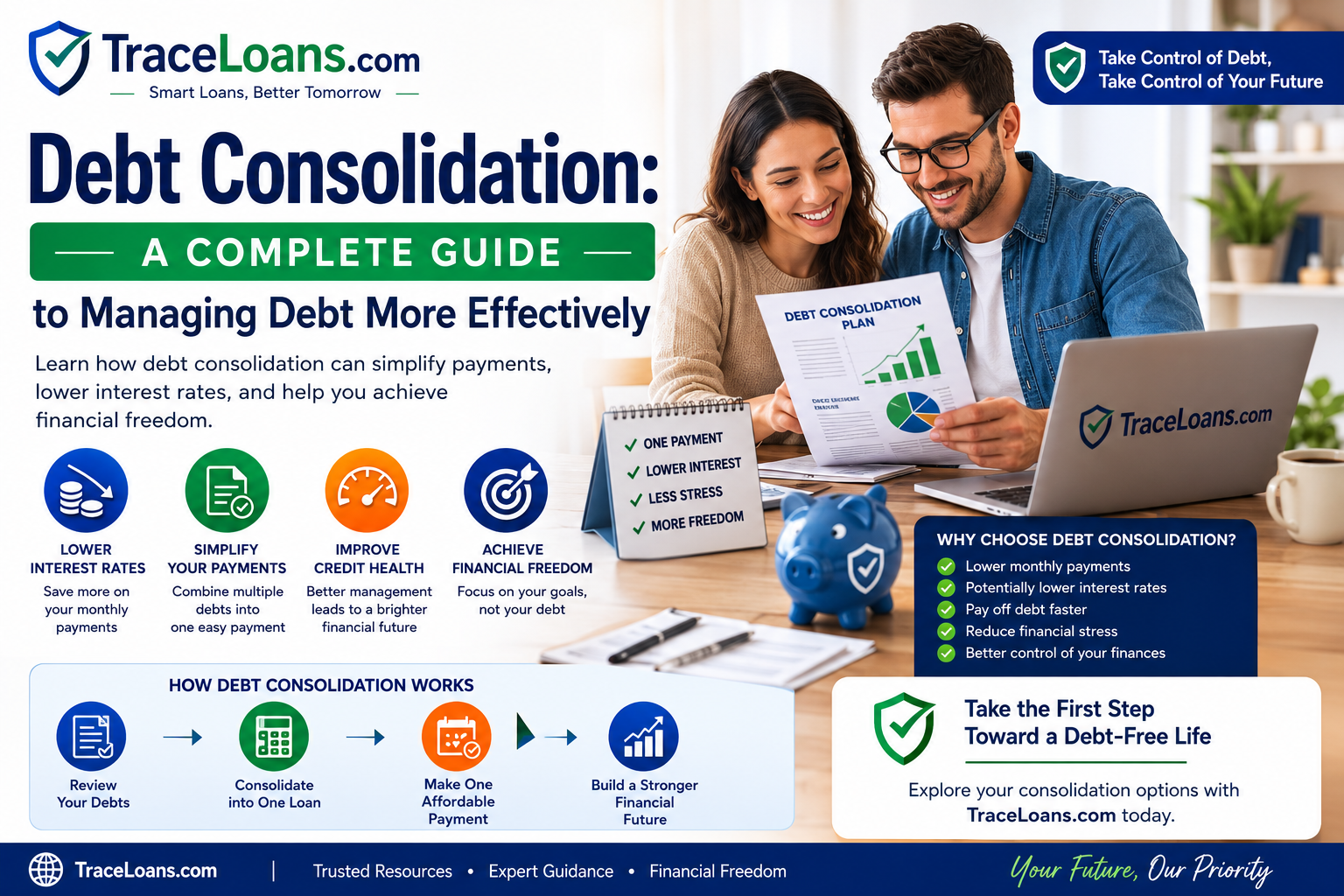
The concept behind traceloans.com debt consolidation revolves around combining multiple debts into one manageable obligation. Instead of juggling several creditors and payment schedules, borrowers can focus on a single monthly payment.
Debt consolidation is often considered by individuals seeking greater financial clarity. By streamlining repayment responsibilities, borrowers may find it easier to track progress, avoid missed payments, and create a more structured plan for eliminating debt over time.
Why Debt Consolidation Has Become So Popular
Modern consumers frequently carry multiple forms of debt simultaneously. Credit cards, installment loans, medical expenses, and emergency borrowing can create a complicated financial landscape that becomes difficult to manage effectively.
As a result, debt consolidation solutions have gained popularity because they offer simplicity. Many borrowers view consolidation as a practical financial management tool rather than merely a debt reduction strategy, making services related to traceloans.com debt consolidation increasingly relevant.
How Debt Consolidation Works
Debt consolidation typically involves obtaining a new loan or financing arrangement that pays off existing eligible debts. Once the original balances are satisfied, the borrower makes payments toward the new consolidated obligation.
The primary goal is simplification. In many cases, borrowers seek consolidation to secure more predictable repayment terms, a fixed monthly payment, or potentially lower overall interest costs compared to maintaining multiple high-interest accounts.
Common Types of Debt Eligible for Consolidation
Many forms of unsecured debt may qualify for consolidation depending on lender requirements and borrower qualifications. Credit card balances are among the most frequently consolidated obligations due to their often high interest rates.
Personal loans, medical bills, retail financing accounts, and certain unsecured lines of credit may also be included. Understanding which debts qualify is an important step when evaluating traceloans.com debt consolidation options.
Key Benefits of Debt Consolidation
One of the most significant advantages of consolidation is convenience. Managing one payment instead of several can dramatically reduce administrative complexity and improve budgeting accuracy.
Additionally, borrowers may benefit from clearer repayment timelines, reduced risk of missed payments, and potentially lower overall borrowing costs. These advantages explain why debt consolidation remains a widely discussed financial strategy.
Financial Stress Reduction Through Consolidation
Financial stress often stems from uncertainty and complexity. Multiple payment dates and varying balances can create ongoing anxiety, especially when budgets are tight.
By simplifying repayment responsibilities, traceloans.com debt consolidation may help borrowers feel more organized and confident in their financial management. A clearer path forward often contributes to improved financial decision-making.
Potential Interest Rate Advantages
Interest rates play a crucial role in determining the overall cost of debt. High-interest credit card balances, in particular, can significantly increase repayment expenses over time.
When borrowers qualify for favorable terms, consolidation may reduce interest expenses and accelerate debt payoff. However, actual savings depend on individual financial circumstances and loan conditions.
The Importance of Credit Scores
Credit scores often influence consolidation eligibility, interest rates, and loan terms. Lenders typically evaluate a borrower’s credit profile to assess risk and determine available financing options.
Although strong credit generally improves borrowing opportunities, individuals with less-than-perfect credit may still find solutions depending on lender criteria. Evaluating credit standing is a useful first step before pursuing consolidation.
Debt-to-Income Ratio Considerations
Lenders frequently review debt-to-income ratios when assessing loan applications. This metric compares monthly debt obligations against gross monthly income.
A lower ratio often indicates stronger repayment capacity. Borrowers exploring traceloans.com debt consolidation should understand how this financial measure may affect approval outcomes and available terms.
Comparing Debt Consolidation and Debt Settlement
Debt consolidation and debt settlement are often confused, yet they serve different purposes. Consolidation reorganizes debt into a new payment structure while preserving the obligation to repay the full balance.
Debt settlement, by contrast, typically involves negotiating reduced balances with creditors. Each approach carries different financial implications, risks, and potential effects on credit profiles.
Debt Consolidation Versus Balance Transfers
Balance transfer programs are another popular debt management strategy. These arrangements allow borrowers to move credit card balances to accounts offering promotional interest rates for limited periods.
While balance transfers may provide temporary savings opportunities, debt consolidation generally offers a more comprehensive repayment structure. Borrowers should evaluate both options carefully based on their financial objectives.
Factors That Influence Approval
Several variables can affect debt consolidation approval. Income stability, employment history, credit scores, and existing debt obligations often play significant roles in lender evaluations.
Documentation requirements may also vary among providers. Borrowers should prepare financial records in advance to improve application efficiency and facilitate informed lending decisions.
Common Documentation Requirements
Applicants are frequently asked to provide proof of income, identification documents, employment verification, and information regarding existing debts. These records help lenders assess financial circumstances accurately.
Having documentation organized beforehand can streamline the application process. Preparation also enables borrowers to compare available options more effectively and make informed choices.
Cost Components to Understand
Debt consolidation may involve various costs beyond interest rates. Origination fees, processing fees, and other administrative expenses can influence the total borrowing cost.
Carefully reviewing all disclosures remains essential when evaluating traceloans.com debt consolidation opportunities. Understanding both direct and indirect costs helps prevent unexpected financial surprises.
Debt Consolidation Comparison Table
| Feature | Debt Consolidation Loan | Balance Transfer | Debt Settlement |
|---|---|---|---|
| Primary Goal | Combine debts into one payment | Move debt to lower-rate card | Reduce debt through negotiation |
| Monthly Payments | Single payment | Credit card payment | Negotiated payments |
| Credit Impact | Often neutral to positive if managed responsibly | Depends on utilization and repayment | May negatively affect credit |
| Interest Charges | Usually fixed or structured | Promotional then variable | Not always applicable |
| Debt Forgiveness | No | No | Sometimes |
| Repayment Structure | Predictable | Varies by card terms | Negotiated |
| Best For | Multiple debts | Credit card debt | Severe financial hardship |
Building a Successful Repayment Strategy
Debt consolidation should be viewed as part of a broader financial plan rather than a standalone solution. Long-term success requires disciplined budgeting and consistent payment behavior.
Borrowers who continue accumulating new debt after consolidation may struggle to achieve lasting financial improvement. Sustainable financial habits remain essential for meaningful progress.
Budgeting After Consolidation
Creating a realistic monthly budget can strengthen consolidation outcomes. Budgeting helps borrowers allocate resources effectively while ensuring debt obligations remain manageable.
A comprehensive budget should include savings goals, emergency funds, living expenses, and debt repayment commitments. This balanced approach supports overall financial resilience.
Emergency Funds and Financial Stability
Unexpected expenses often contribute to debt accumulation. Medical emergencies, vehicle repairs, or temporary income disruptions can quickly strain household finances.
Maintaining an emergency fund alongside a consolidation strategy helps reduce reliance on future borrowing. Even modest savings can improve financial stability significantly.
Common Mistakes to Avoid
Many borrowers mistakenly view consolidation as a complete solution rather than a financial management tool. Without behavioral changes, debt challenges can reappear over time.
Another common mistake involves focusing solely on monthly payment reductions while overlooking total repayment costs. Evaluating the complete financial picture remains essential.
Understanding Loan Terms Carefully
Loan agreements contain important details regarding repayment schedules, fees, penalties, and interest calculations. Thorough review helps borrowers understand their obligations fully.
Before committing to any debt solution, individuals should ensure they understand every aspect of the agreement. Informed decisions generally lead to better financial outcomes.
The Role of Financial Education
Financial literacy plays a crucial role in debt management success. Understanding credit, budgeting, interest rates, and borrowing principles empowers consumers to make better decisions.
Borrowers exploring traceloans.com debt consolidation can benefit from expanding their financial knowledge alongside pursuing debt relief strategies. Education often enhances long-term financial confidence.
Real-World Debt Consolidation Scenario
Consider a borrower managing five separate credit card balances with varying interest rates and payment dates. Tracking obligations becomes increasingly difficult as balances fluctuate.
After consolidating these debts into a single repayment arrangement, the borrower gains improved visibility into progress and simplifies monthly financial management. While results vary, this example illustrates why consolidation remains attractive.
Market Trends in Debt Consolidation
Consumer demand for streamlined financial solutions continues to grow. Digital lending platforms and online financial marketplaces have expanded access to debt management resources.
As financial technology evolves, borrowers increasingly seek transparent tools, educational resources, and simplified application processes. These trends continue shaping the debt consolidation landscape.
Evaluating Whether Consolidation Is Right for You
Debt consolidation is not universally appropriate for every financial situation. Borrowers should carefully assess income stability, existing obligations, spending habits, and long-term goals.
For many individuals, consolidation can provide structure and clarity. However, understanding personal financial circumstances remains the foundation of any successful debt management decision.
Expert Perspective on Debt Management
As financial educator Dave Ramsey has often stated:
“A budget is telling your money where to go instead of wondering where it went.”
This principle highlights an important reality. Debt consolidation can simplify repayment, but lasting financial success depends on disciplined money management and intentional financial planning.
Conclusion
Traceloans.com debt consolidation represents a topic of growing interest among consumers seeking practical ways to simplify debt repayment and improve financial organization. While consolidation does not eliminate debt, it can create a more manageable structure that supports responsible repayment and long-term financial stability.
The effectiveness of traceloans.com debt consolidation ultimately depends on individual circumstances, loan terms, budgeting habits, and financial discipline. Borrowers who combine consolidation with strong money management practices often place themselves in a better position to achieve lasting financial progress. Before pursuing any debt solution, carefully evaluate costs, benefits, eligibility factors, and long-term objectives to ensure the strategy aligns with your overall financial goals.
Read More: Puzutask Com: The Complete Guide to Modern Task Management and Productivity
FAQ
What is traceloans.com debt consolidation?
Traceloans.com debt consolidation refers to debt management and consolidation solutions that help borrowers combine multiple debts into a single payment structure for easier financial management.
Can traceloans.com debt consolidation lower monthly payments?
In some situations, traceloans.com debt consolidation may reduce monthly payments by extending repayment terms or securing more favorable interest rates, though results vary by borrower.
Does debt consolidation affect credit scores?
Debt consolidation can influence credit scores positively or negatively depending on payment behavior, credit utilization, and overall financial management after consolidation.
Who should consider traceloans.com debt consolidation?
Individuals managing multiple high-interest debts, struggling with payment organization, or seeking a simplified repayment strategy may consider traceloans.com debt consolidation as a potential option.
Is debt consolidation better than debt settlement?
Debt consolidation and debt settlement serve different purposes. Consolidation reorganizes repayment while debt settlement focuses on negotiating reduced balances under specific circumstances.
What debts can be included in traceloans.com debt consolidation?
Eligible debts often include credit card balances, personal loans, medical bills, and other unsecured obligations, depending on lender requirements and qualification standards.
How long does debt consolidation take?
The timeline varies depending on the lender, documentation requirements, approval process, and individual financial circumstances. Some applications may be processed relatively quickly, while others require additional review.