




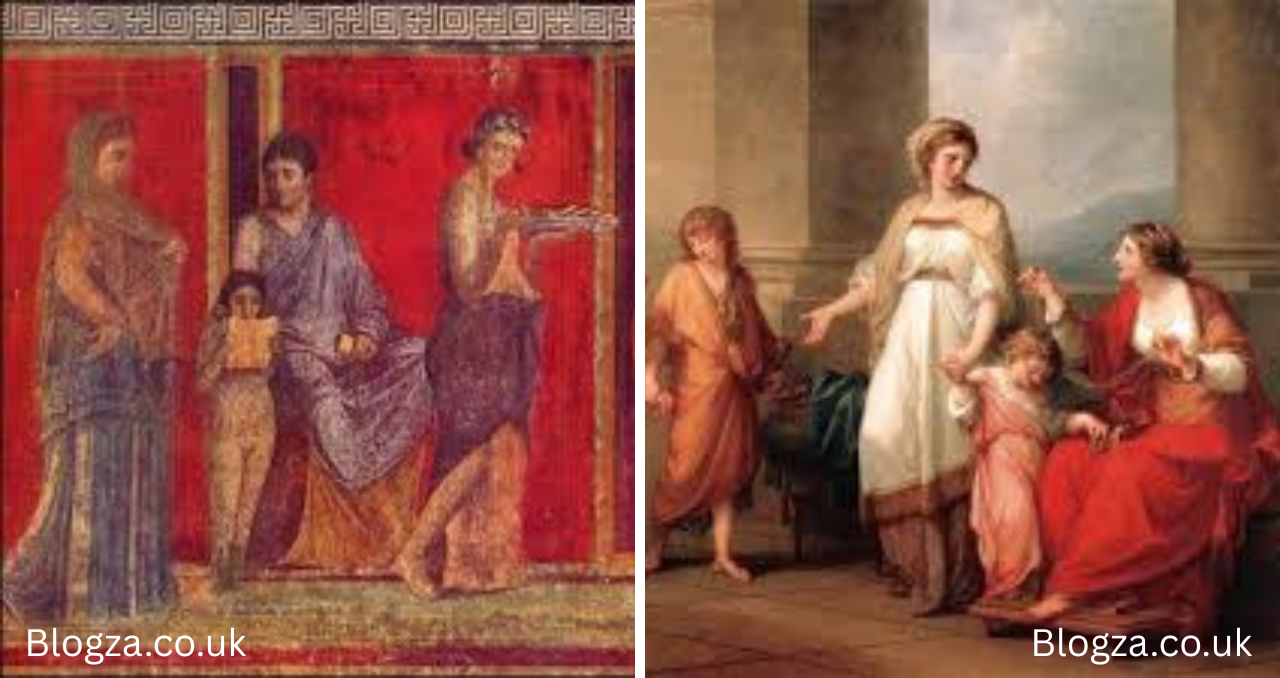
Roman Family Strong: Inside the Powerful Bonds That Shaped an Empireyt
When “Family” Meant Everything in Ancient Rome
Behind the marble statues, roaring crowds, and legendary emperors, the real backbone of Rome was far more intimate—and far more powerful: the family.
In ancient Rome, being “Roman Family Strong” wasn’t just a sentimental idea. It was a survival strategy, a political weapon, and a lifelong identity rolled into one.
Every decision, from marriage to money to military service, was tied to one central belief:
If the family stands strong, everything else follows.
And that belief helped shape one of the most influential civilizations in human history.
The Roman Family Was a Mini-Empire
Forget the modern idea of a nuclear family. A Roman household was more like a small kingdom.
At its center stood not just parents and children, but an entire structure of power and responsibility.
A typical Roman family could include:
- The father, mother, and children
- Grandparents and extended relatives
- Adopted sons or political heirs
- Slaves and household workers
- Clients who depended on the family’s protection
This wasn’t just a home—it was a social, economic, and political unit.
In Rome, your family wasn’t just who you loved. It was who you survived with.
The Unshakable Authority of the Father
At the heart of every Roman household stood the paterfamilias, the male head of the family.
His authority was absolute in legal terms, and his word often defined the direction of the entire household.
He controlled:
- Property and inheritance
- Marriage arrangements
- Family finances
- Public reputation
- Discipline and household rules
But this wasn’t just about control—it was about responsibility.
A strong paterfamilias was expected to protect his family’s honor, secure its future, and ensure its legacy endured for generations.
In Roman eyes, a weak head meant a weak family—and a weak family meant a weak future.
Loyalty Was the Currency of Survival
If there is one word that defined Roman family life, it is loyalty.
From childhood, Roman children were taught that their identity was inseparable from their family name.
Success wasn’t personal—it was collective.
Failure wasn’t individual—it affected everyone.
This created a powerful emotional bond:
- Sons were expected to honor their fathers’ legacy
- Daughters were raised to protect family reputation through marriage
- Relatives were expected to support each other in politics and business
In Rome, betrayal wasn’t just personal—it was catastrophic.
And that fear of losing honor kept families tightly bound together.
Women Behind the Curtain of Power
While Roman society is often remembered as male-dominated, Roman women played a far more influential role than history sometimes suggests.
They were the silent strategists of the household.
Roman women often managed:
- Household finances
- Property operations
- Slave supervision
- Social networking among elite families
- Early education of children
In elite families, women could also become powerful political influencers, shaping alliances through marriage connections and social gatherings.
They might not have always stood in the public spotlight, but behind closed doors, their influence was undeniable.
Many historians now argue that without Roman women, the empire’s elite family systems could not have functioned.
Childhood in Rome: Training Future Legacy-Builders
Roman children were not simply raised—they were trained for legacy.
From a young age, they were prepared to carry the weight of their family name.
Education often included:
- Reading and writing (especially Latin and Greek)
- Public speaking and rhetoric
- Religious rituals and traditions
- Moral discipline and obedience
- Military training for boys in elite families
Boys were prepared for public life—politics, military service, or administration.
Girls were prepared for household leadership and strategic marriage alliances.
The goal wasn’t personal freedom.
It was family continuity.
Marriage: A Strategic Alliance, Not Just Romance
In ancient Rome, marriage was rarely just about love.
It was about power, property, and politics.
Families arranged marriages to:
- Strengthen political alliances
- Expand wealth and land ownership
- Secure loyalty between elite houses
- Increase social standing
Marriage was a contract between families—not just individuals.
This made Roman marriage both stable and strategic, though often emotionally complex.
Behind every wedding stood negotiations, expectations, and long-term ambitions.
Adoption: Rome’s Secret Weapon for Legacy
One of the most fascinating aspects of Roman family life was the role of adoption.
Unlike modern assumptions, Roman adoption was not only about caring for children without families.
It was a powerful tool for:
- Preserving family names
- Securing political heirs
- Strengthening alliances
- Preventing dynastic collapse
Some of Rome’s most famous leaders were adopted into powerful families to continue political legacies.
In Rome, blood mattered—but legacy mattered more.
A family line did not have to end simply because there was no biological heir.
When Family Bonds Turned Into Family Wars
Of course, not every Roman family story was one of unity and strength.
Behind the public image of loyalty often lay intense private conflict.
Roman history is filled with:
- Inheritance disputes
- Political betrayals between relatives
- Rivalries between siblings
- Power struggles for control of wealth
- Tragic family downfalls driven by ambition
In elite circles, family bonds could become fragile when power was involved.
Some of Rome’s most dramatic historical moments came not from enemies outside the family—but from tensions within it.
This constant mix of loyalty and rivalry created a pressure cooker environment where families could rise—or collapse—very quickly.
Religion and Ritual: Keeping the Family Spirit Alive
Religion played a major role in Roman family life.
Each household had its own sacred traditions and rituals designed to protect the family.
Families regularly honored:
- Household gods (Lares and Penates)
- Ancestors through rituals and offerings
- Festivals tied to family protection and prosperity
These rituals weren’t just spiritual—they reinforced unity.
They reminded every member that they were part of something larger than themselves.
A Roman family wasn’t just living together.
They were spiritually bound together.
Reputation: The Invisible Force That Ruled Everything
In Rome, reputation could make or break a family.
A strong reputation meant:
- Political influence
- Marriage opportunities
- Economic advantage
- Social respect
A damaged reputation could lead to isolation and decline.
This made every action, public or private, deeply significant.
Families worked tirelessly to protect their name because it was their most valuable asset.
In many ways, reputation was the invisible currency of Roman society.
Why the Roman Family Model Still Fascinates Us Today
Even after thousands of years, the idea of “Roman family strong” continues to capture attention.
Why?
Because the core struggles remain familiar:
- Balancing personal ambition with family duty
- Navigating generational expectations
- Managing wealth and inheritance
- Maintaining unity through conflict
- Defining identity within a family structure
Modern families may not operate like Roman households, but the emotional dynamics feel surprisingly timeless.
The tension between independence and loyalty is still very real today.
The Legacy That Never Disappeared
Rome may have fallen, but its idea of family strength never truly faded.
The Roman model taught the world something powerful:
A family is more than individuals—it is a living legacy.
It is built through discipline, loyalty, sacrifice, and shared purpose.
And while the world has changed dramatically, the core question remains the same:
What does it take to keep a family strong across generations?
Read More: Mina Badie: Career, Biography, Film Legacy, and Lasting Influence in Hollywood
Final Thoughts: The Strength Behind the Empire
The Roman Empire is often remembered for its armies, emperors, and architecture.
But beneath all of it was something quieter—and arguably more important.
It was the strength of families who believed in duty, honor, and continuity.
The phrase “Roman family strong” isn’t just historical—it’s a reminder that civilizations are not only built by rulers and soldiers, but also by the families who hold everything together behind the scenes.
So the question remains:
In today’s world, what does a “strong family” truly look like—and how far would you go to protect it?