



Leopold Stokowski: The Visionary Conductor Who Changed Classical Music Forever
The Mysterious Origins and Remarkable Rise of a Musical Genius
Leopold Stokowski was born on April 18, 1882, in London, England, to a Polish father and an Irish mother. Despite his British birthplace, Stokowski spent much of his adult life cultivating a mysterious persona, often claiming he was born in Poland or Germany and even adjusting his birth year to seem younger. This deliberate fabrication was encouraged by his first wife, the pianist Olga Samaroff, who believed an exotic European background would help his career in the United States. Regardless of these embellishments, his raw musical talent was undeniable from the very beginning.
At only thirteen years old, Stokowski became the youngest student ever accepted into the prestigious Royal College of Music in London, where he studied organ and composition. His early career was rooted in the church, serving as the organist at St. James’s Church in Piccadilly, a position that honed his understanding of sustained, powerful sound. This organ background would later profoundly influence his orchestral transcriptions, as he often arranged music to mimic the grandeur and singing quality of a pipe organ. In 1905, he made the life-changing decision to move to New York City, accepting a position as organist and choirmaster at St. Bartholomew’s Church, a move that would ultimately launch his legendary conducting career.
Stokowski made his formal conducting debut in 1909 with the Cincinnati Symphony Orchestra, and he immediately made waves with his progressive programming choices. He insisted on performing works by living composers like Richard Strauss, Claude Debussy, and Edward Elgar, which was still considered quite radical for American orchestras at the time. His four years in Cincinnati were short but incredibly impactful, serving as a testing laboratory for the revolutionary ideas about orchestral seating, bowing techniques, and repertoire that he would soon unleash on a much larger stage. By 1912, at just thirty years old, he had caught the attention of the powerful patrons of the Philadelphia Orchestra, who offered him the music director position, a role that would define his legacy for the next twenty-five years.
How Stokowski Created the Legendary Philadelphia Sound
When Leopold Stokowski arrived in Philadelphia, the orchestra was good but not exceptional. Under his relentless drive and visionary ear, however, it would become arguably the finest orchestra in the world. The signature “Philadelphia Sound” was a lush, velvety, almost hypnotic quality in the strings, combined with gleaming, powerful brass that never blared or overwhelmed. Stokowski achieved this opulence through several specific and innovative techniques that had never been attempted before on such a scale. He spent countless hours experimenting with the placement of musicians on stage, moving the brass and percussion to the rear and elevating the string sections to create a richer, more blended acoustic effect.
The most famous of his innovations was the introduction of “free bowing” for the string sections. Traditionally, all violinists and cellists move their bows in perfect synchronization, which can create tiny, almost imperceptible breaks in the sound when they change direction. Stokowski instructed his string players to stagger their bow strokes, so that while one player was changing direction, another was continuing the motion. This created a continuous, seamless river of tone that was utterly unique to the Philadelphia Orchestra. Audiences and critics alike were mesmerized by this new sound, describing it as having a “golden” or “velvety” texture that no other ensemble could replicate.
Beyond bowing, Stokowski developed what he called a “free breathing” technique for the wind and brass sections, encouraging them to produce a more vocal, singing quality rather than a percussive attack. He was a constant tinkerer with acoustics, adjusting stage risers, changing reflective surfaces, and even experimenting with different types of wood for the stage floor. This attention to the physics of sound extended to his famous conducting style. By forgoing the traditional baton, Stokowski used his expressive, bare hands to shape the music directly, coaxing a full spectrum of colors and vibrato from the ensemble. One former violinist famously noted that Stokowski was a “magician” who could transform the orchestra’s sound simply by the way he lifted his hand or tilted his head.
The Hollywood Years and the Magic of Fantasia
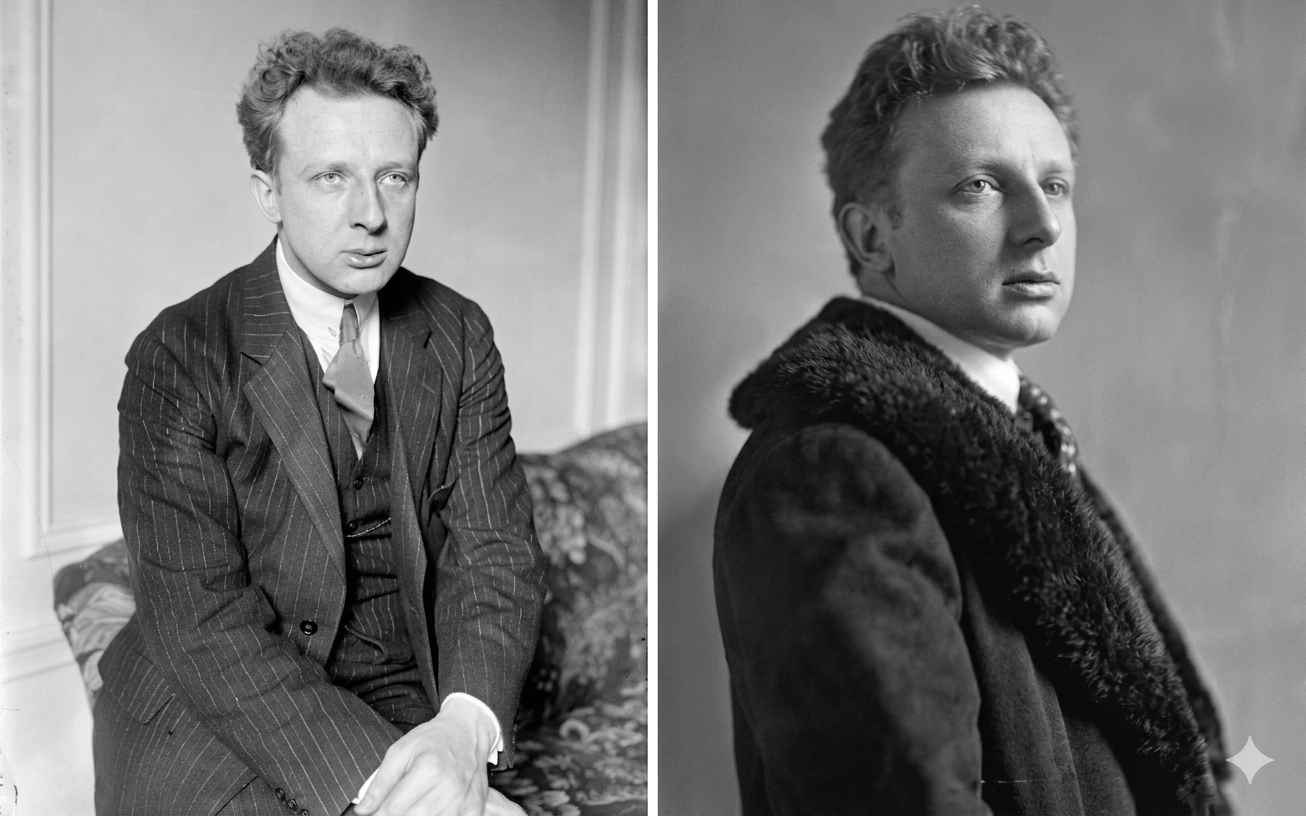
Leopold Stokowski’s fame exploded far beyond the concert hall when he entered the world of Hollywood cinema. His profile, with its magnificent mane of silver hair and aristocratic, chiseled features, was as recognizable as any movie star of the era. He appeared as himself in several films, including The Big Broadcast of 1937 and One Hundred Men and a Girl alongside the popular singer Deanna Durbin. However, his most significant and enduring cinematic collaboration was with the animation pioneer Walt Disney. In 1940, Disney released Fantasia, an ambitious and revolutionary animated feature film set entirely to classical music, and Stokowski was the perfect partner for this bold experiment.
Stokowski not only conducted the Philadelphia Orchestra for the entire soundtrack but also personally collaborated on the musical arrangements, most notably for Bach’s “Toccata and Fugue in D Minor” and Mussorgsky’s “Night on Bald Mountain.” The Fantasia project was a perfect marriage of Stokowski’s natural showmanship and his lifelong commitment to making classical music accessible to everyday people. The film famously features a silhouette of Stokowski shaking hands with Mickey Mouse, a scene that has become an indelible, beloved part of global pop culture. More than just a visual spectacle, Stokowski used Fantasia to push the boundaries of what was technologically possible in audio recording.
For this film, he insisted on using a revolutionary multi-track stereophonic sound system called Fantasound. This involved recording the orchestra over telephone lines laid between the Academy of Music in Philadelphia and Bell Laboratories in Camden, New Jersey. While the system was too expensive and complex to be widely adopted at the time, Fantasia was the first commercial film ever released with stereophonic sound. This pioneering work laid the essential groundwork for the surround sound systems used in cinemas and home theaters today. Through Fantasia, Stokowski introduced millions of children and adults to the masterpieces of Beethoven, Bach, Tchaikovsky, and Stravinsky, many of whom would never have set foot in a traditional concert hall.
Pioneering Recording Technology and Stereo Sound
Leopold Stokowski was not merely a conductor who tolerated recording technology; he was a true technology enthusiast who saw the recording studio as a new and exciting artistic frontier. Long before his work on Fantasia, he was already experimenting with the electrical recording process in the early 1930s. He collaborated extensively with Bell Laboratories on a series of experimental high-fidelity and stereophonic recordings with the Philadelphia Orchestra. These sessions, preserved on thirty-five millimeter magnetic film, were decades ahead of their time and captured the brilliance of the Philadelphia Sound with a clarity that consumer record players of the era could not yet reproduce.
These pioneering stereo efforts are highly sought after by audiophiles and music historians today. Modern remastering techniques continue to reveal the sonic richness and spatial detail that Stokowski captured in those early experiments. He understood that recording was not just about documentation but about creating a new artistic experience for the listener at home. He would often re-record the same piece multiple times, tweaking microphone placements and hall acoustics until he achieved the exact emotional and sonic effect he desired. His personal papers contain detailed diagrams of microphone setups and seating arrangements, demonstrating his obsessive, scientific approach to sound.
His obsession with acoustics was not limited to the recording studio. He was constantly modifying his live concert environments, adjusting stage risers, changing the reflective surfaces around the orchestra, and even experimenting with different types of wood for the stage floor to alter the resonance. Stokowski believed that the performance space was as much an instrument as the violin or flute, and that a conductor had a responsibility to understand and shape that space. He wrote extensively about these ideas in his book Music for All of Us, where he described the orchestra as a conduit for emotional light, a means to an end to deliver the raw power of the music directly to the listener’s heart. This holistic view of sound, from the musician’s finger to the listener’s ear, made him a truly unique figure bridging the romantic past and the technological future.
Championing Modern Composers and Difficult New Music
While Leopold Stokowski is often remembered today for his lush, romantic transcriptions of Bach, he was also one of the fiercest champions of modern, often difficult, contemporary music. He had an insatiable curiosity for the new and the challenging, and he never shied away from programming works that critics and audiences found bewildering or even ugly. He gave the American premieres of major works by composers such as Gustav Mahler, whose massive symphonies were still considered unplayable by many, as well as Arnold Schoenberg, Edgard Varèse, and Igor Stravinsky. Stokowski had the courage to program Stravinsky’s Rite of Spring, a work that had caused a riot at its Paris premiere, years before most American conductors would touch it.
One of his most significant achievements was conducting the world premiere of Charles Ives’s complex Fourth Symphony. Ives was an American insurance executive who wrote incredibly dense, polytonal, and rhythmically complicated music that had been dismissed as unperformable for nearly two decades. Stokowski spent months studying the score and rehearsing the massive forces required, including multiple conductors and a chorus. The premiere was a landmark event in American music history, proving that the avant-garde had a place in the concert hall. Stokowski argued passionately that music must evolve to stay alive, and that living composers deserved to be heard just as much as the dead masters.
Beyond the avant-garde, Stokowski was also a supporter of composers who were simply overlooked or out of fashion. He programmed the music of the French composer Charles Tournemire and the English mystic Cyril Scott when no one else would. He believed that a great orchestra had a duty to serve the music of its own time, not just to preserve the past. This commitment to new music was not just intellectual but deeply emotional. Stokowski once wrote that discovering a new piece of music was like falling in love, a feeling of excitement and possibility that kept him young and passionate throughout his incredibly long career.
Building Youth Orchestras and Fighting for Accessibility
Leopold Stokowski was deeply committed to nurturing the next generation of musicians and listeners, believing that young people were the true future of classical music. To this end, he founded several orchestras specifically designed to train young talent. The most famous of these was the All-American Youth Orchestra, which he established in 1940. This ensemble brought together talented young musicians from across the country, giving them professional-level training and performance experience. Stokowski personally conducted their concerts and tours, treating these teenagers and young adults with the same seriousness and respect he gave to the Philadelphia Orchestra.
He also initiated low-priced youth concerts in New York City, breaking down the economic barriers that kept so many families from experiencing live classical music. He believed that a concert ticket should not be a luxury item reserved for the wealthy elite. In 1962, at the remarkable age of eighty, he founded the American Symphony Orchestra in New York. This orchestra was specifically designed to be a high-quality, free-admission ensemble that would bring great music to a broad, diverse audience across all five boroughs. He programmed concerts in parks, schools, and community centers, refusing to accept that classical music was only for the wealthy or the highly educated.
Stokowski’s commitment to young musicians went beyond just creating orchestras. He personally mentored countless young conductors and instrumentalists, writing them letters of encouragement and offering them performance opportunities. He was known for staying after concerts to talk to young people in the audience, answering their questions about the music and the instruments. His work ensured that his legacy was not just about the past masters of music, but about the future of the art form itself. Many of the young musicians he trained went on to become leaders in orchestras around the world, spreading his philosophy of musical accessibility and innovation wherever they went.
The Wandering Years and International Fame
After leaving the Philadelphia Orchestra in 1941, Leopold Stokowski entered a nomadic yet incredibly productive phase of his career. He shared conducting duties with the legendary Arturo Toscanini at the NBC Symphony Orchestra, a partnership of two titans with vastly different musical philosophies. While Toscanini was a strict literalist who demanded absolute fidelity to the printed score, Stokowski remained the romantic interpreter who was not afraid to change dynamics, phrasing, or even instrumentation to achieve a desired emotional effect. Despite their differences, the two men respected each other, and their alternating concerts drew massive audiences eager to compare the two masters.
He then served as a co-conductor of the New York Philharmonic Symphony Orchestra from 1946 to 1950, sharing duties with the young Leonard Bernstein. However, Stokowski never stayed in one place for too long, driven by his restless desire to start new projects and conquer new challenges. He took the helm of the Houston Symphony Orchestra from 1955 to 1962, transforming that regional ensemble into a nationally respected group through his rigorous training and adventurous programming. During these years, he also maintained a strong presence in Los Angeles, founding the Hollywood Bowl Symphony Orchestra and becoming a regular fixture at the iconic outdoor venue, where his flowing mane of white hair became a beloved symbol of summer music.
He traveled extensively throughout his seventies and eighties, guest conducting orchestras across the globe. He made frequent visits to London to conduct the BBC orchestras, returning to his birthplace as a conquering hero. Even in his eighties and nineties, Stokowski’s energy seemed inexhaustible. He continued to make studio recordings at a furious pace, capturing definitive versions of works by Tchaikovsky, Scriabin, Sibelius, and Rachmaninoff. He appeared in public for the last time in 1975 at the age of ninety-three, conducting the London Symphony Orchestra. He continued making studio recordings until just a few months before his death on September 13, 1977, at the age of ninety-five, still chasing musical perfection until the very end.
The Enduring Magic of Stoky and His Cultural Legacy
Leopold Stokowski, affectionately known as Stoky to his friends and the musicians who played under him, left behind a complex and fascinating legacy that blends serious, scholarly musicianship with populist showmanship. He was a man of tantalizing contradictions. He was a perfectionist who freely rewrote the masters like Bach and Beethoven to suit his own romantic tastes. He was a serious artist who also romanced the reclusive movie star Greta Garbo and married into the Vanderbilt fortune. He was a Londoner who pretended to be a Polish aristocrat. Yet, these contradictions made him the perfect ambassador for classical music in the twentieth century. He proved that the concert hall did not have to be a stuffy museum, but could be a place of excitement, color, and constant reinvention.
His visual style, free of the baton and full of flowing, poetic hand gestures, permanently changed the way audiences perceive the role of a conductor. Before Stokowski, most conductors stood relatively still, using a baton with precise, military gestures. After Stokowski, audiences expected a show, a visual translation of the music’s emotional peaks and valleys. His influence can be seen everywhere in popular culture. His caricature lives on in the iconic Looney Tunes character Bugs Bunny, who famously mimicked the maestro’s flowing hair and dramatic podium presence in the classic episode Long-Haired Hare. That episode introduced Stokowski to generations of children who had no idea who he was, cementing his image as the archetype of the glamorous, powerful conductor.
Today, the Philadelphia Sound he created continues to resonate through that orchestra, nurtured by his successors like Eugene Ormandy and treasured by listeners and critics worldwide. His recordings, particularly those from the 1950s and 1960s for labels like Everest and Capitol, remain benchmarks of orchestral power and beauty, celebrated for their white heat intensity and cinematic scope. Music streaming services have introduced his unique interpretations to a new generation of listeners who are discovering the magic of his Bach transcriptions and his blazing performances of Russian repertoire. Leopold Stokowski proved that magic and music are one and the same. He illuminated the score, giving light to all who listened, and his legacy as a showman, innovator, and true musical genius remains undimmed more than forty years after his passing.